
 Wetherill Park, NSW, Australia · Sydney, NSW, Australia


In many Australian homes, from the leafy streets of Sydney to the growing residential hubs of Blacktown and Liverpool, high water pressure is often mistaken for a sign of a “strong” plumbing system. However, in the world of plumbing, too much of a good thing can be a disaster waiting to happen.
According to Australian Standard AS/NZS 3500.1, the maximum water pressure within a property should not exceed 500 kPa. When pressure climbs above this limit, your pipes, joints, and appliances are under constant, structural stress. Understanding how to regulate this pressure is the single most effective way to prevent a catastrophic burst.
The “Silent Killer” of Modern Plumbing
High water pressure is often called a “silent killer” because it doesn’t cause a pipe to snap instantly. Instead, it slowly erodes the integrity of your plumbing over time.
Think of your pipes like a balloon blown up to its absolute limit. It only takes a tiny extra surge—like a tap being turned off suddenly—to cause a “pop.” In plumbing, this surge is known as a water hammer. This shockwave travels through the line, slamming into valves and joints. Over time, this leads to:
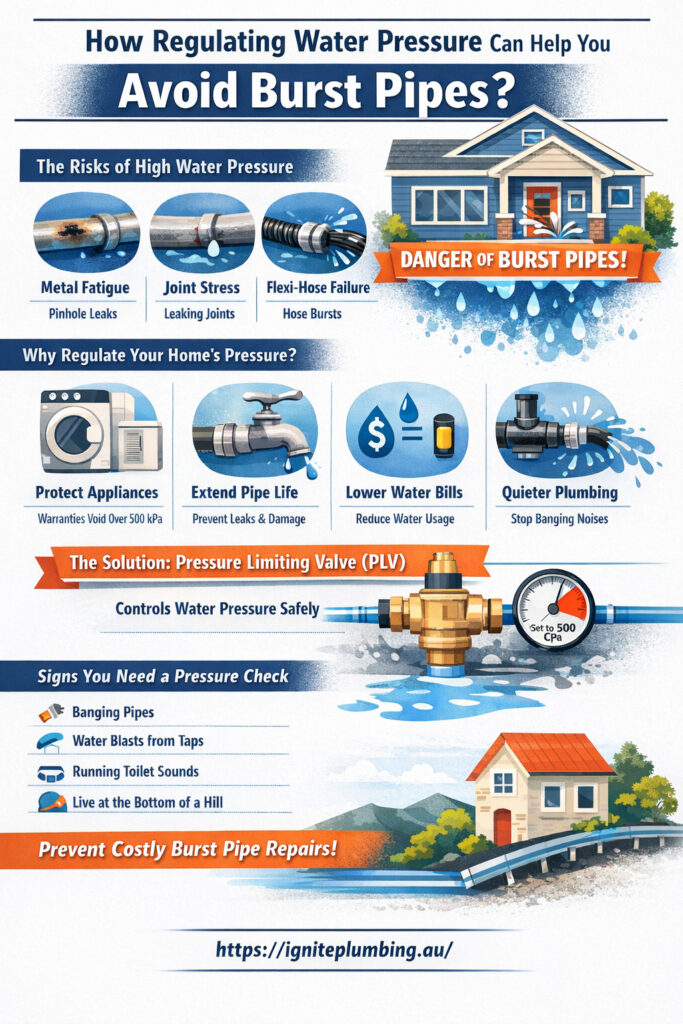
- Metal Fatigue: Copper pipes thin out, eventually leading to “pinhole” leaks.
- Joint Stress: Constant vibrating and slamming causes soldered or crimped joints to weep and eventually fail.
- Flexi-Hose Failure: The braided stainless steel hoses under your kitchen and bathroom sinks are the most vulnerable point. Under high pressure, the rubber inner lining expands and snaps, causing rapid flooding.
If you can prevent these, you can avoid burst pipe repairs in Sydney or the mentioned regions.
Why Regulate Your Home’s Pressure?
Controlling the force of water entering your home isn’t just about safety; it’s about the longevity of your entire household.
- Protecting Appliance Warranties: Many major appliance manufacturers (such as those for dishwashers and washing machines) explicitly state that their warranties are void if the home’s water pressure exceeds 500 kPa.
- Extending the Life of Taps and Toilets: High pressure wears out the ceramic discs in modern mixer taps and causes toilet inlet valves to leak or “hiss” constantly.
- Lowering Water Bills: Higher pressure forces more water through your showerheads and taps every second. By regulating your pressure, a household in Blacktown or Liverpool can significantly reduce their quarterly water consumption.
- Quietening the Home: Properly regulated pressure eliminates the annoying “thump” or “bang” in the walls, leading to a much quieter plumbing system.
The Solution: The Pressure Limiting Valve (PLV)
For most homes in high-pressure zones across Sydney, the solution is a Pressure Limiting Valve (PLV). This device is typically installed at the water meter and acts as a “security guard” for your property. It takes the high, erratic pressure from the street and “steps it down” to a consistent, safe level. This way, you can avoid burst pipe repairs in Blacktown or any of the other regions.
Signs your home needs a pressure check:
- Pipes bang or vibrate when a tap is turned off.
- Your taps “spit” or blast water aggressively when first opened.
- You notice a constant trickle or running sound in your toilet cistern.
- You live at the bottom of a hill, where gravity naturally increases the street pressure.
Conclusion
A burst pipe can cause thousands of dollars in damage to flooring, cabinetry, and electronics. By simply ensuring your home’s pressure is regulated to Australian standards, you can move from reactive repairs to proactive protection. Don’t wait for a flood to find out your pressure is too high—a simple pressure test is the first step toward a safer, quieter home.
Get an Estimate
If you need burst pipe repairs in Liverpool, Ignite Plumbing and Jet Blasting is the name you can count on. Call 0426 663 544 for a service estimate or click the Get a Quote button at the top and fill in the details.
Will high pressure void my appliance warranties?
Yes. Most dishwasher and washing machine manufacturers void warranties if pressure exceeds 500 kPa, as internal valves aren't designed for higher stress.
Why is pressure higher at night?
This is "static pressure." Daytime demand in your area keeps street pressure lower; at night, demand drops, causing pressure to surge into your home’s pipes.
What is a PLV and where does it go?
A Pressure Limiting Valve (PLV) caps incoming force. It’s installed at your water meter to "step down" street pressure to a safe, consistent level before it enters your house.
How does pressure cause "Water Hammer"?
Higher pressure increases water velocity. When a tap closes, that fast-moving water creates a violent shockwave (thumping), which eventually weakens joints and snaps pipes.
Do new builds in Blacktown or Liverpool need a PLV?
Often, yes. Despite being new, some builds lack individual regulation. A static pressure test is the only way to confirm your specific property is protected.
Does high pressure damage hot water systems?
Yes. It forces the Pressure Temperature Relief (PTR) valve to leak or "weep" constantly, wasting water and causing the tank’s internal cylinder to fail prematurely.
Will a water-saving showerhead help?
No. Restrictive heads actually increase "back-pressure" in the wall. While less water comes out, the pipes behind the tiles remain under intense stress.
Why do "flexi-hoses" burst so easily?
High pressure causes the rubber core of the hose to expand like a balloon. Constant expansion and contraction fatigue the rubber until it snaps through the metal braiding.
Can I test my own pressure?
You can use a garden tap gauge, but these don't always catch midnight pressure spikes. A professional test provides a more accurate reading of both static and dynamic peaks.
