
 Wetherill Park, NSW, Australia · Sydney, NSW, Australia


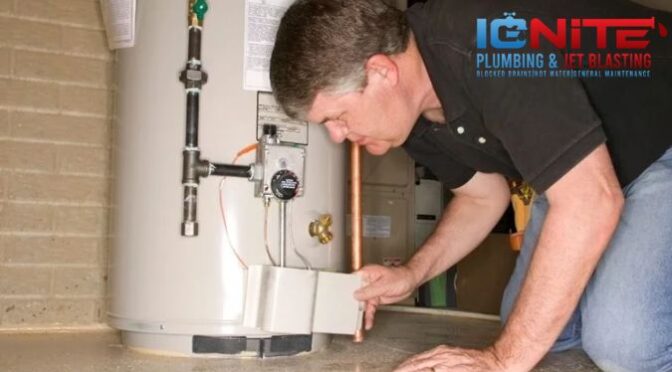
Leaking in a hot water system is one of the most common plumbing issues faced by homeowners, yet it is often the most overlooked until it becomes urgent. A small leak might appear harmless at first, but it can quickly lead to water damage, higher energy bills, mould growth, and even a complete system failure. Whether the leak is from the tank, pipes, or valves, knowing how to respond immediately can prevent expensive repairs and keep your home safe. In this blog, we’ll walk you through practical steps to take when your hot water system begins leaking, from identifying the source to knowing when to call a professional.
Turn Off the Water Supply
The first thing you should do when you notice a leak is to turn off the water supply to stop further water escape. Most hot water systems in Sydney have a shut-off valve located near the unit. If you cannot find it or the valve isn’t functioning properly, turn off the main water supply to your property instead. Acting early reduces the chance of flooding and helps control damage.
Switch Off Power to the Hot Water System
For safety reasons, always turn off the electricity or gas going to the hot water system in Blacktown. Electric units should be turned off at the switchboard, while gas systems must be shut down at the gas isolation valve. Never attempt any inspection or repair while the unit is still powered; water and electricity are a dangerous mix.
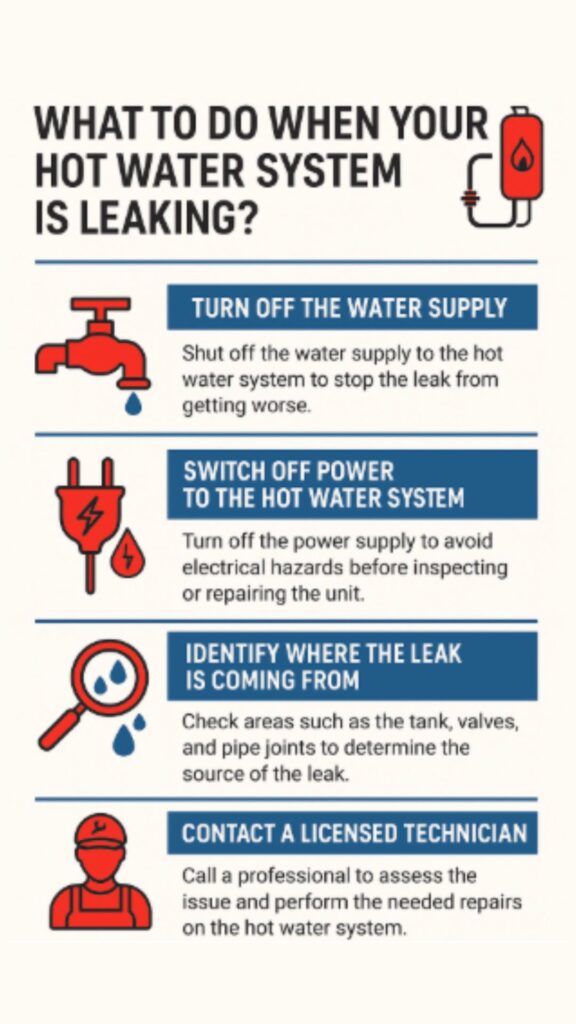
Identify Where the Leak is Coming From
Not all leaks have the same cause. Determining where the water is escaping will help you understand what repair may be required. Tank leaks are often more serious, while valve or pipe leaks may be repaired with part replacements.
Check the Temperature and Pressure Relief Valve
This valve is designed to release excess pressure when water heats up. If it leaks intermittently, it may simply be doing its job. However, a constantly leaking TPR valve could mean excessive temperature or pressure inside the unit with an issue that requires urgent inspection. Ignoring such problems may lead to system failure or safety hazards.
Clear Pooling Water and Monitor for More Leaks
Remove any water around the base of your hot water system in Sydney to prevent slip hazards or damage to the flooring. Place a bucket or towel underneath if the leak continues. Monitor the system for changes; a small leak may escalate quickly, especially in older hot water systems.
Contact a Licensed Technician for Assessment
Some leaks may be minor and fixed with simple component replacement, but others require professional repairs or a complete hot water system upgrade. A licensed plumber can inspect the unit, replace faulty valves, tighten joints or advise whether a new system is a more economical choice.
You shouldn’t ignore a leaking hot water system. You can prevent costly damage and extended downtime by promptly shutting off water, disconnecting power, checking the leak source, and calling a professional. With regular servicing and monitoring, hot water systems can operate efficiently for many years without unexpected breakdowns.
Schedule An Appointment With Us
Book a professional inspection from Ignite Plumbing and Jet Blasting and restore reliable hot water to your home. For more information, contact us at 0426 663 544 or email us at matt@igniteplumbing.net.
Should I turn off the power as well?
Yes. Switch off the electrical or gas supply to the hot water system to avoid hazards while inspecting or waiting for repair.
What are the most common causes of a leaking hot water system?
Corrosion in the tank, loose pipe joints, damaged valves, worn-out seals and high internal pressure are common causes.
How do I know where the leak is coming from?
Check around the tank base, pipe connections, pressure relief valve and inlet/outlet fittings. A plumber can identify hidden leaks more accurately.
Is a leaking hot water system dangerous?
It can be. Electrical contact, mould growth, water damage and even tank bursts may occur if ignored.
Can a leaking hot water system be repaired?
Yes, many leaks caused by faulty valves or pipes can be repaired. However, if the tank itself is leaking due to corrosion, replacement may be necessary.
Should I continue using the system while it’s leaking?
No. Using a leaky hot water system can worsen the damage, increase energy consumption, and pose safety risks.
How quickly should I call a plumber?
You should call a plumber as soon as possible. A minor leak can become a major failure quickly, so early professional assessment is recommended.
What can I do to prevent future leaks?
Regular servicing, checking valves, maintaining pressure levels, and flushing the tank with sediment can extend its lifespan and prevent leakage.
When is replacement better than repair?
If the system is old, rusted, constantly failing or leaking from the tank body itself, replacement is usually the safest and most cost-effective solution.
